

How to Read Your Paystub
I still remember getting one of my first paychecks and doing a double take. I knew what I was making per hour. I knew how many hours I worked. The math was simple. But the number on that check? It did not match what I had in my head at all. Turns out I completely forgot that taxes were a thing. Like, a real, significant, takes-a-chunk-of-your-money thing.
If you’ve had that same moment, you’re in good company. And if you haven’t gotten there yet, consider this your heads up.
Learning how to read your paystub isn’t exactly exciting stuff, but it is one of those foundational money skills that makes everything else easier. I’ve come a long way since that first paycheck shock. Now I’m managing a salary, a rental property, a home bakery, and investments. But it all started with understanding where my money was actually going. So let’s break it down.
First Things First: What’s a Paystub?
Your paystub is basically a receipt for your paycheck. If you’re figuring out how to read your paystub, this is where it starts.
It shows you three things:
- How much you earned
- What was taken out
- What you actually take home
Even if your pay goes straight to direct deposit and you never see a physical check, you still have a digital paystub to review. And you should actually look at it, especially in your first few pay periods at a new job.
What You’ll See on a Typical Paystub
Here’s a rundown of what’s on there and what it actually means.
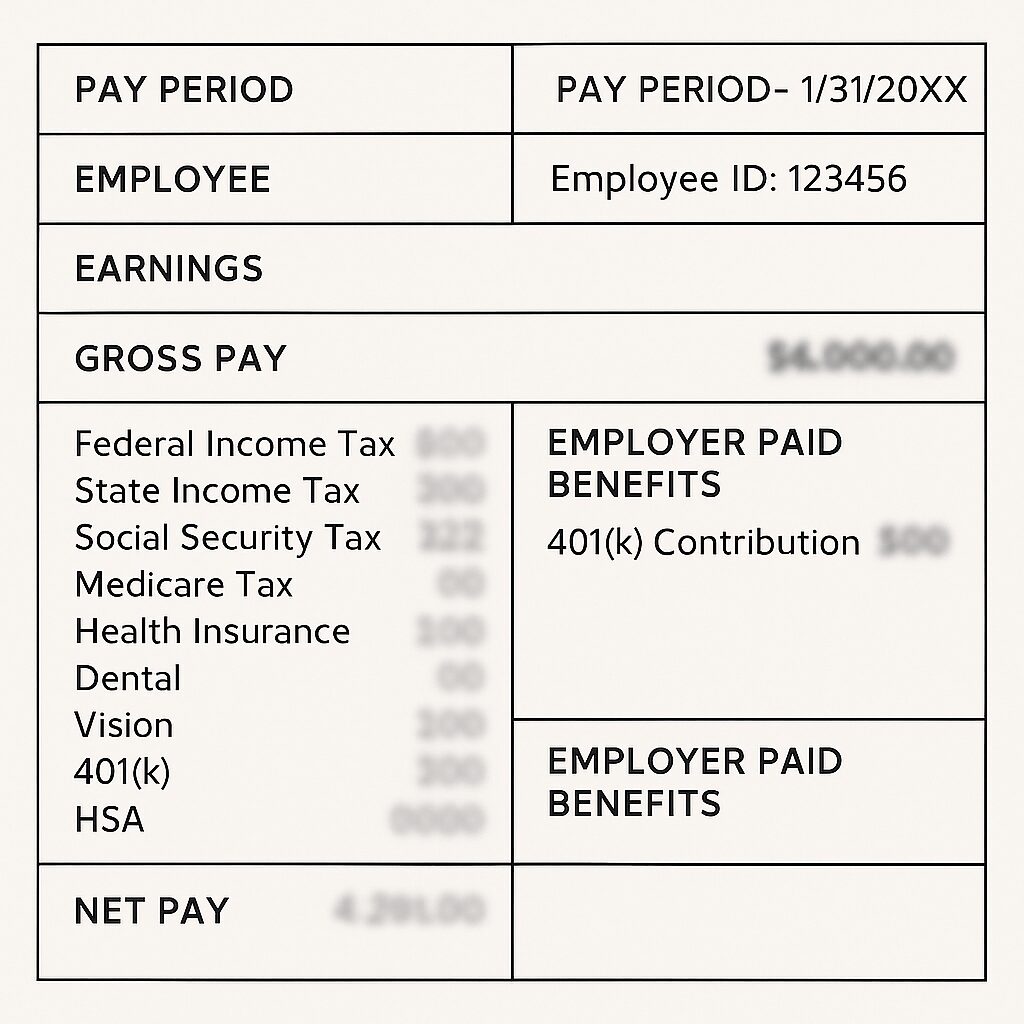
Gross Pay
Gross pay is the total you earned before anything is deducted. So if you make $20/hour and worked 40 hours, your gross pay is $800. This is the number that looks good, but it’s not what lands in your bank account.
Net Pay (Your Actual Take-Home)
Net pay is what’s left after taxes and deductions come out. This is the number you actually budget with. One of the most common questions when learning how to read your paystub is why net and gross look so different. The answer is taxes, benefits, and retirement contributions all adding up fast.
When I first started working, that gap genuinely stung. It still does a little, honestly. Watching money leave before it ever touches your hands takes some getting used to.
Example:
- Gross Pay: $800
- Deductions: $200
- Net Pay: $600
Always budget based on net pay. Always.
Taxes Withheld
This is the big one that surprises most people when they’re first learning how to read your paystub. Your employer is required to withhold several different taxes from every single paycheck:
| Tax Type | What It Covers |
|---|---|
| Federal Income Tax | Taxes for the U.S. government |
| State Income Tax | Taxes for your state (if applicable) |
| Social Security Tax | Funds retirement benefits |
| Medicare Tax | Funds healthcare for people 65+ |
Quick tip: If your tax withholding looks off, check your W-4 form with HR. It controls how much gets taken out and it’s worth reviewing.
Benefits Deductions
Here’s the part that also stings at first but is actually working in your favor. When you sign up for benefits through your employer, those contributions come out of your paycheck too.
Things you might see here:
- Health, dental, and vision insurance premiums
- 401(k) contributions
- Employer 401(k) match (this part is free money and worth getting every single dollar of)
My dad told me early on to at least contribute enough to get my full employer match. So I set it up from day one and automated it. I’m glad I did. But I won’t pretend it doesn’t sting a little every payday seeing that money disappear into an account I can’t touch for decades. It’s the right move. It just takes a minute to emotionally accept it.
Other Deductions
Depending on your employer and your benefit elections, you might also see:
- HSA (Health Savings Account) contributions
- FSA (Flexible Spending Account) contributions
- Union dues
- Wage garnishments
If something shows up that you don’t recognize, ask. Part of knowing how to read your paystub is protecting yourself from errors.
One Thing Nobody Warns You About
Here’s a paystub moment that catches a lot of people off guard: when you leave a job and get paid out your unused vacation days, that lump sum gets taxed at a higher rate than your regular paycheck. So if you’re sitting on two weeks of PTO thinking you’re about to get a nice chunk of money, just know the government is going to take a bigger bite than usual. It’s not a mistake on your paystub. It’s just a frustrating reality.

What to Check Every Time
Once you know how to read your paystub, here’s a quick checklist to run through regularly:
- Any deductions you don’t recognize
- Net pay vs. gross pay (does the difference make sense?)
- Tax withholding amounts (consistent week to week?)
- Health insurance and benefit deductions (correct amounts?)
- Retirement contributions like 401(k) (are they going in?)
- Employer match (is it showing up?)
How Often Should You Review It?
Knowing how to read your paystub is one thing. Actually checking it regularly is another. When you’re brand new to a job, look at it closely for the first few pay periods. Make sure your pay rate, tax withholdings, and any deductions are correct. After that, a quick review once every few month or so is plenty. Think of it like a financial oil change. Regular check-ins catch mistakes before they become a bigger problem.
Why This Actually Matters
Knowing how to read your paystub helps you:
- Catch errors before they cost you real money
- Understand the difference between what you earn and what you keep
- Make sure you’re getting every benefit you signed up for
- Budget with your actual numbers, not what you wish you were making
The Bottom Line
Understanding how to read your paystub is one of the smartest early money moves you can make. It’s where financial confidence actually starts. Not with investing or side hustles or rental properties, even though all of that comes later. It starts with knowing exactly what’s happening to your money before it ever hits your account. Build that habit now and everything else gets a whole lot easier.
P.S. Check out our other Salary & Earning posts! If you want to keep making the most of what your employer is already offering, check out How to Maximize Employee Benefits. And if you want to go deeper on other tax-advantaged accounts, 401(k) Explained Simply: How It Works, Why It Matters, and How Much It Could Grow and ESPP Explained Simply: Why You Shouldn’t Miss Out and HSA Account Explained Simply: Why It’s One of the Best Tools for Healthcare and Retirement are great next reads.


One Comment