

Is It Too Late to Catch Up Financially in Your 30s or 40s?
We were at a small get together talking about a friend’s upcoming wedding when the conversation took a turn. Somehow it drifted from wedding colors to the harder stuff. Who’s not married yet even after years together. Who still doesn’t own a house because they can’t agree on where to settle down. Who isn’t sure if they’re saving enough for a wedding, a house, or honestly, retirement. And underneath all of it was this one question nobody wanted to say out loud but everyone was clearly thinking: is it too late to catch up financially?
Here’s the thing. Almost everyone at that table felt it. Weddings pushed off because of Covid. Housing that feels impossibly out of reach compared to what our parents paid. Investing that got started late, or stopped and started a dozen times, or never really got organized in the first place. And somewhere along the way, someone always brings up the avocado toast thing, like the whole reason we’re behind is one too many oat milk lattes instead of, you know, actual wages not keeping up with actual home prices.
So let’s talk about it for real. Not the guilt trip version. The honest version, with actual numbers, so you can figure out where you stand and what to do next.
Is It Too Late to Catch Up Financially? What the Benchmarks Actually Say
I want to start with the number everyone’s heard of, because if we don’t address it directly you’re going to be Googling it anyway. Fidelity, one of the biggest retirement account providers out there, publishes a common benchmark that gets repeated everywhere: aim to have 1 times your salary saved by age 30, and 3 times your salary saved by age 40.
So if you make $60,000 a year, the benchmark says you’d want around $60,000 saved by 30, and $180,000 by 40.
I know. For a lot of people that number lands somewhere between “wildly out of reach” and “wait, that’s it?” And honestly, both reactions make sense once you understand what the number actually is.
Quick but important clarification: this benchmark is retirement accounts only. We’re talking 401k and IRA money. It does not include your emergency fund, a brokerage account, home equity, or a 529 for your kids. It’s not your net worth. It’s one slice of your financial picture, specifically the slice tied to retirement.
That matters two ways. If you’ve got a healthy brokerage account or you’ve been building equity in a home, don’t panic just because your retirement accounts alone look light against that benchmark. But also, if that 1x or 3x number is basically everything you’ve got saved anywhere, it’s fair to feel like even the “official” number is a stretch. Either way, this is a benchmark, not a grade. It’s a general reference from a general formula, not a verdict on how you’re doing with money, and it definitely doesn’t answer is it too late to catch up financially all on its own.
The Debt Question Nobody Wants to Answer Honestly
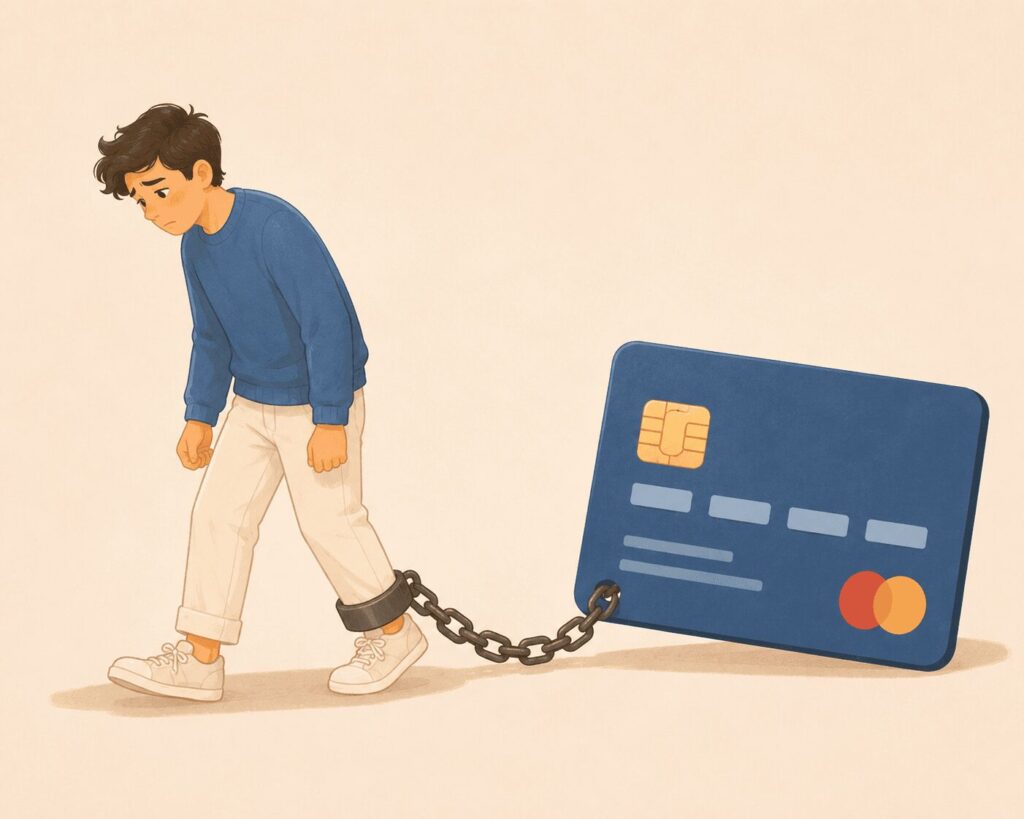
Before we get into what to actually do, we have to talk about debt, because it changes everything.
Not all debt is created equal, and treating a mortgage the same as a credit card balance is where a lot of people get stuck in their own head. Here’s a simple way to sort it out.
Priority one: high interest debt. Credit cards, personal loans, anything north of 8 to 10 percent interest. This should come before almost everything else, including extra retirement contributions beyond your employer match. The math just doesn’t work in your favor otherwise. You can’t reliably out invest a 22 percent credit card rate.
Priority two: student loans, depending on the rate. Lower rate federal loans can often be paid down steadily while you also invest. Higher rate private loans lean more toward the “pay this off aggressively” category.
Not urgent: your mortgage. Carrying a mortgage in your 30s or 40s isn’t a red flag. It’s just what buying a home usually looks like. You don’t need to be debt free including your house to be doing well financially. A mortgage alone doesn’t answer the question is it too late to catch up financially, it’s a normal part of the picture.
If you’re sitting there with debt asking yourself is it too late to catch up financially, here’s the honest answer: no, but the order you tackle things in matters more than the total number you’re staring at right now.
Catching Up in Your 30s
If you’re in your 30s wondering is it too late to catch up financially, here’s where I’d actually put your energy.
Get the full employer match for your 401k first, always. If your company matches retirement contributions and you’re not getting all of it, that’s leaving free money on the table. Fix that before anything else on this list.
Build an emergency fund you’d actually survive on. The standard advice is 3 to 6 months of expenses. But if you’re in a leadership role, a specialized field, or a higher paying position, be honest with yourself that those roles often take longer to replace if something goes sideways. Leaning toward 6 to 12 months isn’t overkill, it’s just realistic. And park that money in a high yield savings account instead of a regular savings account. There’s no reason to leave it earning close to nothing when a HYSA will pay you actual interest for doing nothing extra.
Once your match and emergency fund are covered, work through the rest of your extra savings in this order:
- HSA – Health Savings Account (if you have a high deductible health plan): it gets a triple tax advantage, which makes it one of the best accounts available if you qualify
- Max out your 401k beyond the match, if your budget allows
- ESPP (Employee Stock Purchase Plan): worth participating in if your company offers one, especially with a discount
- Roth IRA: max it out if your income qualifies
You don’t need to do all of this at once. Just know the order so you’re not guessing where extra money should go.
Automate your contributions so you don’t have to rely on willpower. I’ve said this before and I’ll keep saying it because it’s just true. The people who build wealth steadily aren’t usually the ones picking the perfect fund or timing the market. They’re the ones who set up automatic contributions and then basically forget about it. Consistency beats cleverness every single time.
Stop comparing your timeline to your friends, siblings, or strangers online. This one’s less tactical and more mental, but it matters. I’ve known since my twenties roughly what I wanted, and I’ve been fortunate to hit a lot of my own targets on schedule. But I’m wired a little differently than most people I know, including my own husband. I’m the one who drives basically every financial decision in our house because that’s just how my brain works. Not everyone is built that way, and that’s not a character flaw. If your timeline looks different from someone else’s, that’s not proof you’re behind. It just means you’re on your own path.
Pick one thing to fix, not five. If you’re feeling overwhelmed, don’t try to overhaul your entire financial life this weekend. Pick the highest impact thing, usually the employer match or the high interest debt, and start there.
Catching Up in Your 40s

Your 40s hit differently because retirement feels closer, and this is usually when the “is it too late to catch up financially” question gets loudest. Here’s what I’d tell a friend standing right where you are.
Remember you likely still have 20 plus years of investing ahead of you. That’s not nothing. That’s still enough time for compound growth to do real work, especially if you increase your contribution rate even modestly starting now.
Increase your savings rate instead of chasing the exact benchmark number. If you’re behind the 3x salary benchmark, don’t spiral over the gap. Focus on the percentage of your income you’re putting away right now, and see if you can push it up even a few percentage points. Small increases now matter more than you’d think, because you’ve still got time for that money to grow.
Look closely at where your money is actually going. Not in a shame spiral kind of way. In a genuinely curious, “let me actually look at this” kind of way. A lot of people in their 40s haven’t looked closely at their spending since their 20s, and priorities shift a lot in that time.
Prioritize retirement savings over your kids’ college fund. I know that feels backwards emotionally, but there are loans and scholarships for college. There’s no loan for your retirement.
Talk to your partner about where things actually stand. If one of you is the “money person” like I am in my house, that’s fine, but both people need to actually know where things stand. Catching up works a lot better as a team sport.
Plan to pay off your mortgage before you retire, not right at 67. A mortgage that stretches right up until retirement age isn’t the end of the world, but if you can structure things so it’s paid off a few years earlier, that’s one less fixed expense competing with your income once you’re living off savings.
So, Is It Too Late to Catch Up Financially?
No. It’s genuinely not. What actually determines whether you catch up isn’t the exact number you’re starting from. It’s whether you can build a habit you’ll actually stick with.
If you take one thing away from this, let it be that “is it too late to catch up financially” is the wrong question to spend your energy on. A perfect plan you abandon in three months does less for you than an imperfect plan you stick with for the next twenty years. Commit to what you can actually sustain right now, even if it’s smaller than you wish it were, and build from there. You’ve still got time. Use it.
Download the full “Checklist – Financial Catchup Plan for 30s and 40s” here.
P.S. Check out more Sidekick’s Corner posts.