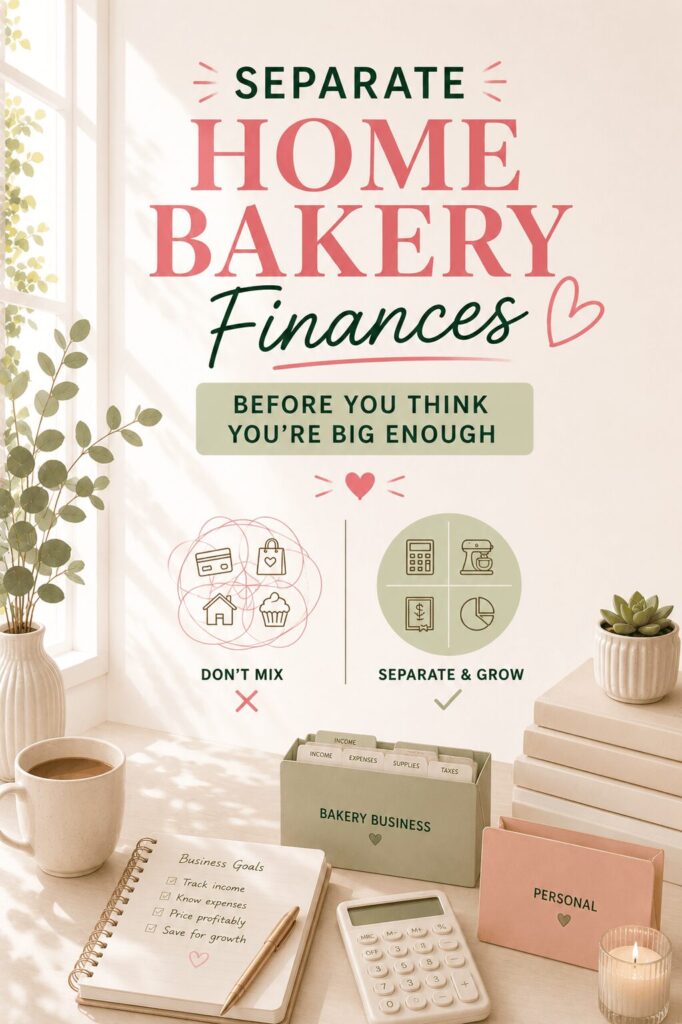

Separate Home Bakery Finances Before You Think You’re Big Enough
You’re not a real business yet. At least, that’s what you keep telling yourself.
You’re just baking out of your home kitchen, taking orders through Instagram DMs, and Venmoing your ingredients to yourself when you remember. It’s casual. It’s fun. It’s not that serious yet.
And that’s exactly the moment to separate home bakery finances. Before it gets complicated, before tax season sneaks up on you, and before one lazy grocery run becomes a habit you can’t undo.
You Don’t Have to Be an LLC to Act Like a Business
A lot of home bakers assume that separating their money is something they only need to do once they’ve “officially” set up a business entity. An LLC, a registered business name, all of that. But honestly? That thinking can cost you.
Even if you’re operating as a sole proprietor with nothing more than a business checking account, the decision to separate home bakery finances is one of the smartest things you can do early on. Here’s why:
It keeps your books clean. If you ever get audited (and yes, it can happen even to small home bakers) you want to show a clear, organized money trail. Business expenses on one side, personal expenses on the other. No “well, I think that grocery run was mostly for orders” conversations with the IRS.
It makes tax time so much easier. When you need to pull together your income and expenses for the year, you’re not scrolling through months of personal transactions trying to remember if that Costco run was business or personal. Everything business-related lives in one place.
It shows you what’s actually profitable. When you separate home bakery finances, you can actually see how your bakery is performing. Are you making money? Breaking even? Spending more than you’re bringing in on supplies? You won’t know if it’s all mixed together.
It builds credibility, even with yourself. There’s something that shifts when you start treating your baking like a business. It’s not just a hobby anymore. You start making better decisions, tracking things more carefully, and growing with intention.
The Grocery Store Moment That Got Me
Here’s a story I think a lot of you will relate to.
I was on a regular family grocery run. You know, the kind where you’re already in the zone, cart half full, just trying to get in and out. I walked past the baking aisle and remembered I was running low on one of my ingredients. Nothing urgent, I wasn’t completely out, but I knew I’d need to restock soon. So I reached for it and threw it in the cart.
Then I stopped.
My business card was at home.
Now, my personal card was right there in my wallet. It would have been so easy to just buy it and figure it out later. Move the money around, write it down somewhere, deal with it. And honestly? Part of me really wanted to. It was inconvenient. I was already there.

But I put the ingredient back.
I didn’t want to start down that road. Not because one purchase would have been the end of the world, but because I know how habits form. You do it once, it’s fine. You do it twice, it’s easier. By the third time, you’ve stopped thinking about it at all. And then suddenly you’re sitting at your kitchen table in April trying to untangle six months of comingled transactions, wishing you had just gone back to the store.
So I made a separate trip later that week. Inconvenient? Yes. Worth it? Absolutely.
That one small decision reminded me why I try so hard to separate home bakery finances in the first place. It’s not about being perfect. It’s about not letting the easy choice slowly become the only choice.
Why Commingling Funds Is a Habit Worth Fighting
Look, doing it once or twice probably won’t ruin you. But the more you mix personal and business money, the harder it becomes to separate home bakery finances when it actually matters.
And there are a few specific situations where it really matters.
If you’re ever audited, the IRS wants to see that your business expenses are real business expenses. When everything is on one card, it gets murky fast. It can look sloppy. Worse, it can look suspicious, even if you did everything right.
It also affects your ability to deduct expenses. You can only write off legitimate business purchases. If your business ingredients are mixed in with your family’s weekly groceries, that receipt becomes a lot harder to defend.
Keeping things separate isn’t just about being organized. It’s about protecting yourself.
Your Resale Certificate Is Worth More Than You Think
Here’s a piece that a lot of home bakers completely overlook, and it’s genuinely a money thing.
A resale certificate is a document that states you intend to sell the purchased items to a final customer. Because the end customer will eventually pay sales tax when they buy from you, your purchase is exempted from sales tax upfront. This prevents double taxation, meaning you shouldn’t be taxed on the same item twice, once when you buy it and again when your customer buys the finished product from you.
That exemption can apply to a lot of what you buy for your bakery:
- Parchment paper and liners
- Cake boards
- Boxes and bags
- Ribbon and twine
- Tags and labels
And ingredients? Those typically aren’t taxed either, because they go directly into making the product you’re selling. They become part of what the customer buys. The logic is the same: no double taxation.
That cute packaging you’re buying to make your orders look beautiful? You likely shouldn’t be paying sales tax on any of it.
But here’s exactly where the decision to separate home bakery finances becomes a real financial one. If you’re buying business supplies on your personal card, you can still use your resale certificate at checkout. The store doesn’t care which card you swipe. But now that purchase is sitting on your personal account mixed in with your groceries, your Target runs, and everything else. When it’s time to account for it, you’re the one who has to sort it out. And the more that happens, the messier your books get. Using your business card keeps the transaction exactly where it belongs from the start, no mental gymnastics required later.
How to Actually Separate Home Bakery Finances (It Doesn’t Have to Be Complicated)
You don’t need to set up a whole corporate structure to do this right. Here’s the simple version:
Open a separate business checking account. Most banks offer free or low-fee options. Even a basic account dedicated solely to your bakery income and expenses makes a huge difference.
Get a business debit or credit card. This is the card you use for every supply run, every ingredient purchase, every packaging order. Not your personal card. Ever.
Run all income through that account. When customers pay you, it goes into the business account. Not your personal Venmo that’s also where your friends split dinner with you.
Keep your receipts. Digital or paper, it doesn’t matter, just keep them. If you buy in store, photograph the receipt and save it. If you buy online, forward the confirmation email to a dedicated folder. Being audit-ready is a good thing, even if you never get audited.
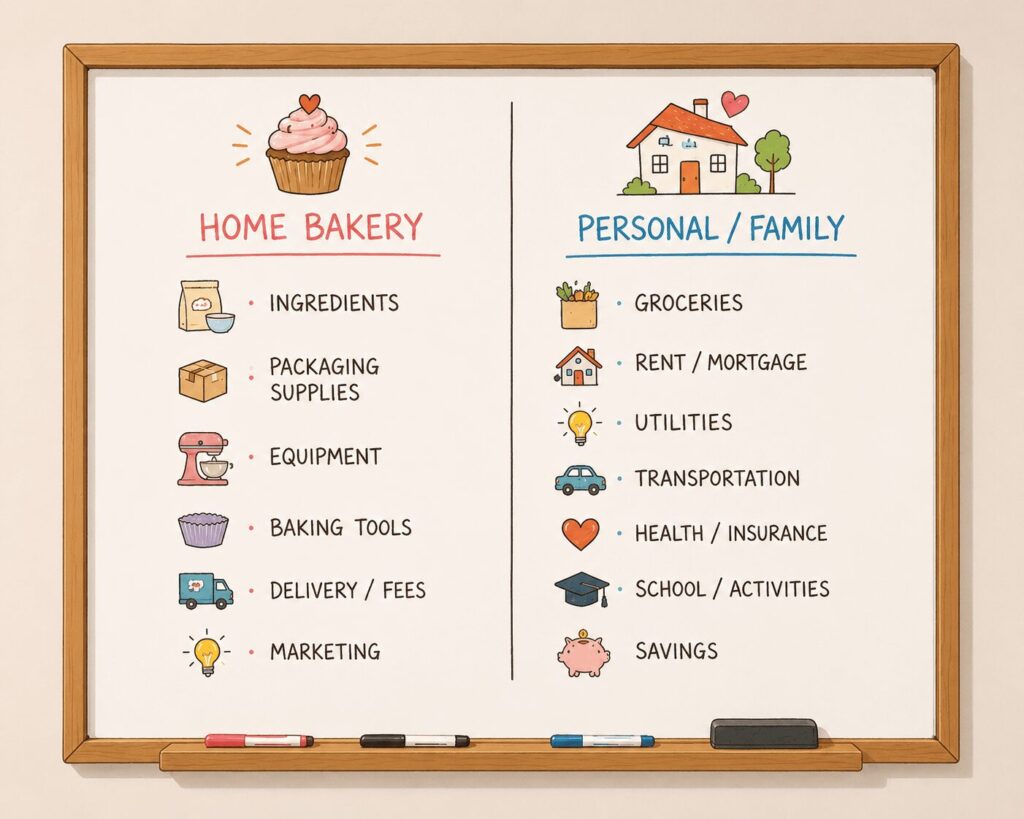
When you consistently separate home bakery finances this way, everything else gets easier. Your taxes, your deductions, your resale certificate claims, all of it flows more smoothly because the foundation is solid.
You’re Already Building Something
If you’ve been running your home bakery for a while and you’ve been a little loose with how you manage the money, this isn’t a judgment. It’s a nudge.
The fact that you’re thinking about how to separate home bakery finances at all means you’re taking this seriously. And that matters. The bakers who build something real are the ones who treat it like a business before it feels like one.
Go open that account. Get the card. Make the inconvenient trip back to the store if you have to.
Future you will be very glad you did.
How are you currently managing your home bakery finances? Are you keeping things separate or still figuring it out? Drop a comment below, no judgment here.
P.S. Check out other Home Bakery post!